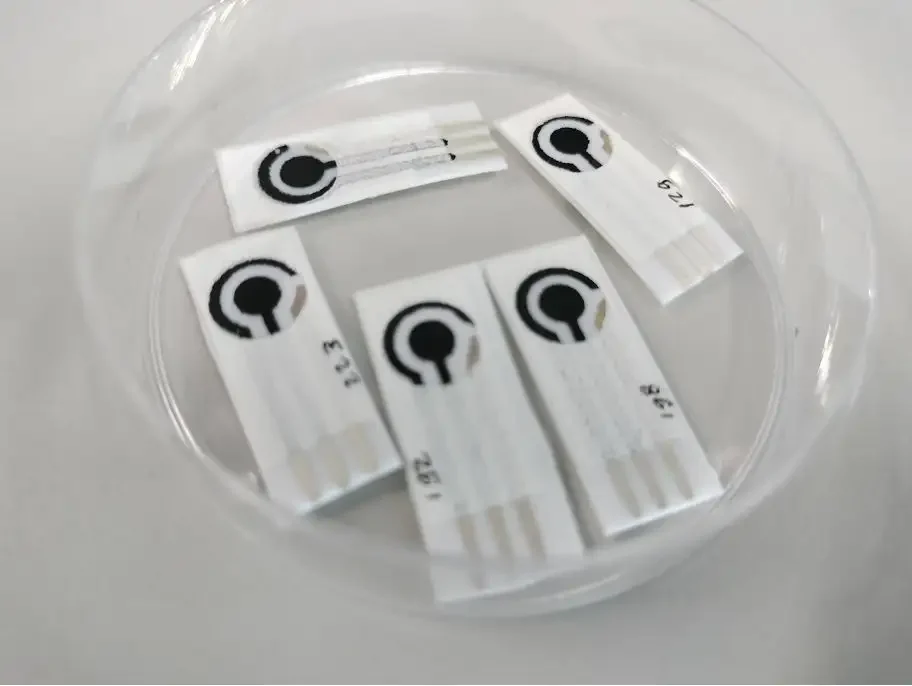

Biosensor research is a field focused on developing devices that integrate bioreceptor components (such as enzymes, antibodies, or nucleic acids) with physicochemical transducers to detect specific analytes. The biological component recognizes a specific target, and the transducer then converts the biological response into a measurable signal, such as an electrical signal. The goal is to create portable, rapid, and sensitive tools for disease diagnosis, environmental monitoring, food safety, and other applications. This type of biosensor has been developed by the Advanced Functional Materials Laboratory at ITB, including devices for detecting glucose, dopamine, and Hepatitis B proteins.
Research Topics
We explore innovative solutions across various fields, including sensors, health diagnostics, and energy technologies. Our research aims to push the boundaries of advanced materials and develop impactful technologies for a sustainable future.
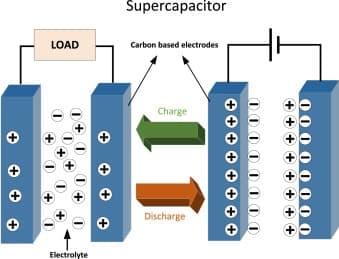
Supercapacitor
A supercapacitor is an electrical energy storage device that possesses unique characteristics compared to batteries, fuel cells, and conventional capacitors. This device is often referred to as an electrochemical capacitor or ultracapacitor. Structurally, a supercapacitor consists of several main components that interact with each other to achieve optimal energy storage performance. These components include electrodes, separators, electrolytes, and conductive substrates. Supercapacitors can be classified into three main types based on their charge storage mechanisms: electrical double-layer capacitors (EDLCs), pseudocapacitors, and hybrid supercapacitors.
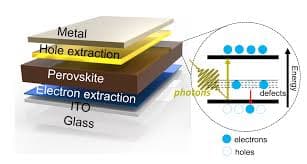
Solar Cell
PSC research focuses on the development and performance improvement of solar cells based on perovskite materials, a class of semiconductors with a unique crystal structure and high efficiency in converting sunlight into electricity.
What is Perovskite?
“Perovskite” refers to a crystal structure with the general formula ABX₃, where:
- A = organic cation (e.g., methylammonium (MA⁺), formamidinium (FA⁺))
- B = metal (e.g., Pb²⁺, Sn²⁺)
- X = halide anion (e.g., I⁻, Br⁻, Cl⁻)
Main Goals of PSC Research
- Improve power conversion efficiency (PCE)
- Enhance long-term stability against moisture, heat, and light
- Reduce toxicity by replacing Pb with non-toxic alternatives
- Lower production costs to compete with silicon
Research Focus in Perovskite Solar Cells
| Focus | Explanation |
|---|---|
| Perovskite Materials | Chemical composition modification for higher stability and efficiency |
| Electron/Hole Transport Layers (ETL/HTL) | Interface optimization for more efficient charge transfer |
| Fabrication Processes | One-step, two-step, spin coating, blade coating, etc. |
| Defect Passivation | Minimizing electron-hole recombination caused by crystal defects |
| Encapsulation | Protection from water and oxygen for longer device lifetime |
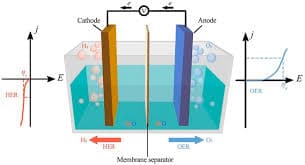
Water splitting
Focuses on splitting water molecules (H₂O) into hydrogen gas (H₂) and oxygen (O₂) using external energy sources, typically from sunlight (photocatalytic), electricity (electrocatalytic), or a combination of both.
| Type | Brief Explanation | Example |
|---|---|---|
| Photocatalytic | Uses sunlight and semiconductors to decompose water. | TiO₂, perovskite |
| Electrocatalytic | Uses electric current and catalysts (usually transition metals) | Pt, NiFe electrodes |
| Photoelectrochemical (PEC) | Combines sunlight and electricity within an electrochemical cell. | PEC with semiconductors such as BiVO₄, hematite |
Research Focus
-
Catalyst Materials: Must be inexpensive, stable, and efficient (e.g., Fe₂O₃, MoS₂, perovskite).
-
Energy Conversion Efficiency: How much light/electrical energy is converted into H₂.
-
Long-Term Stability: Materials should not degrade or corrode in a short time.
-
Production Cost: Reducing cost for commercial applicability.